Tell You What: My Blog
Mar. 23, 2025
By Rob Shapard
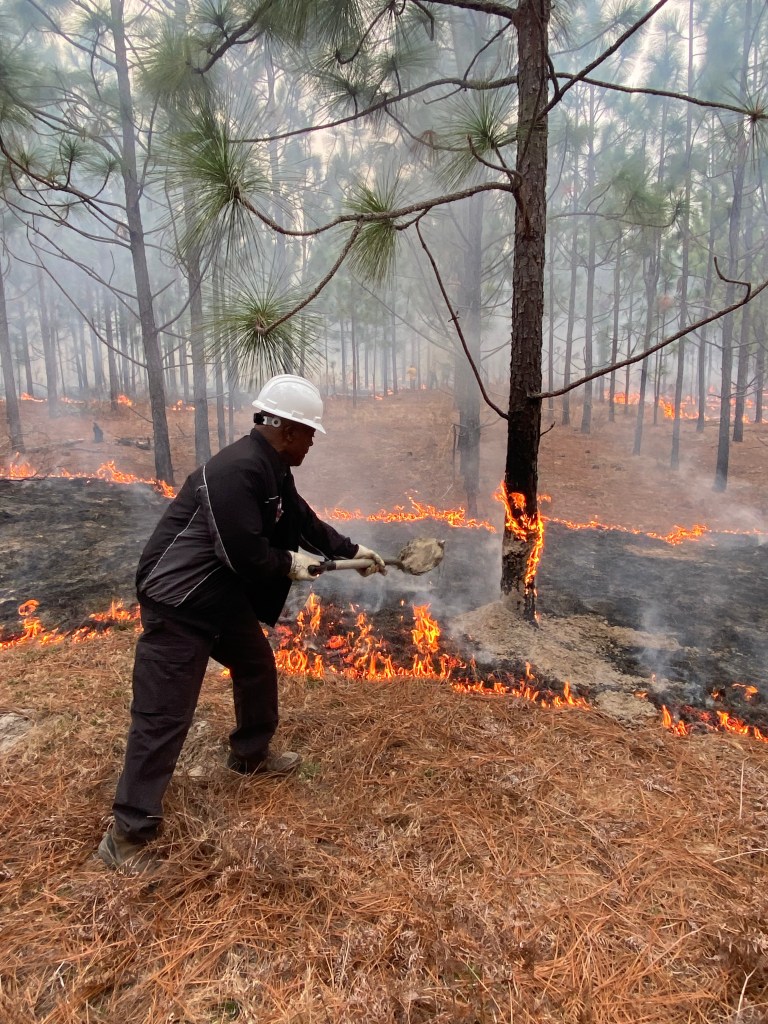

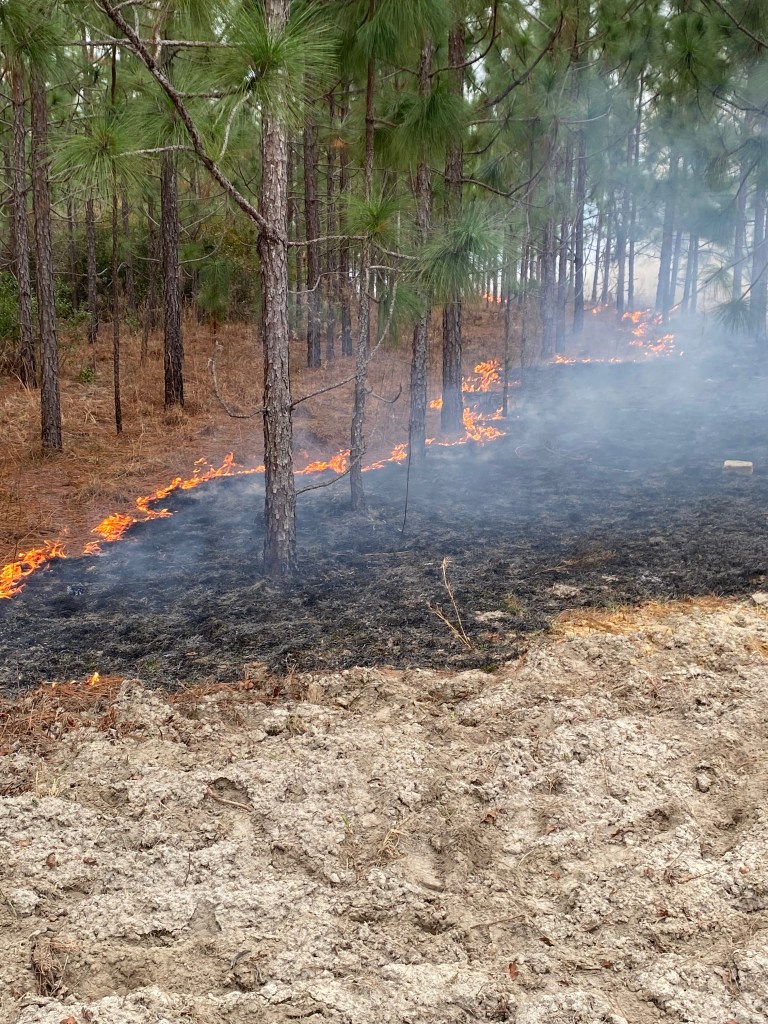
A group of folks came together recently at the Hodges family’s homestead in Emanuel County, Georgia, a rural place within the southern coastal plain, where longleaf pine forests once thrived on millions of acres. On this day, the key conditions allowed for a controlled burn in an area of longleaf pine that Herbert Hodges planted about thirteen years ago on the family’s property.
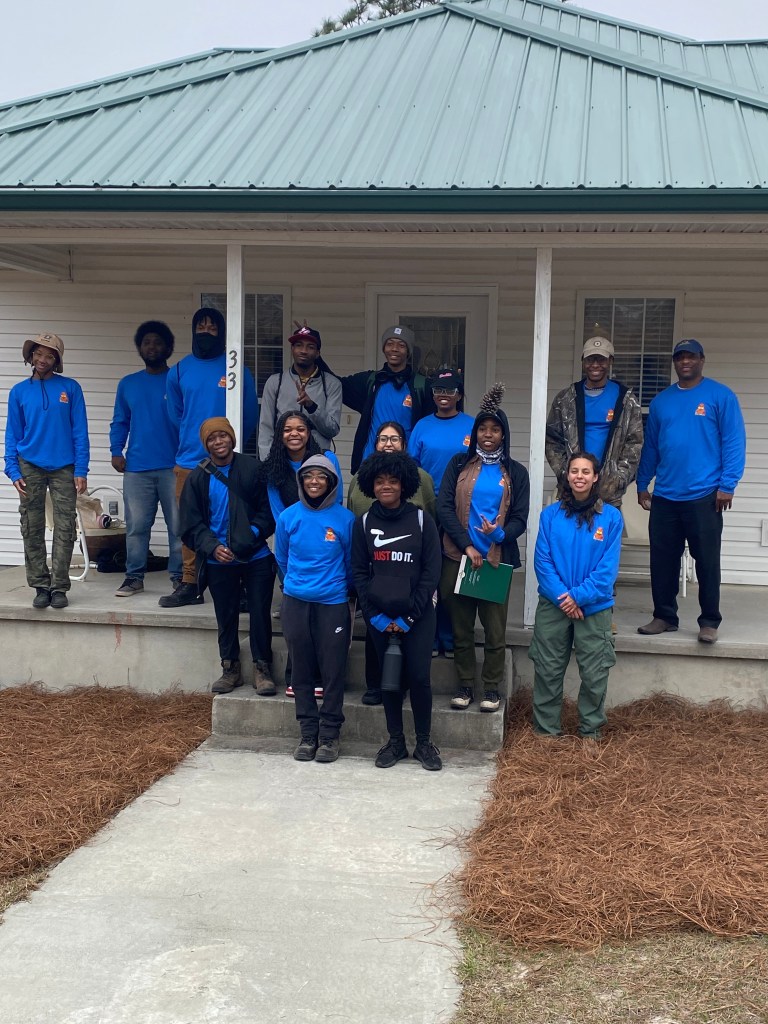
The group members chatted, grabbed coffee, and found seats in the meeting space, glancing at one another and taking in the vibe, while organizers from the National Wildlife Federation (NWF) hustled to finish preparations. The group included landowners, forestry and conservation experts, and college students who had traveled about two hours from Fort Valley State University (FVSU) in central Georgia. Everyone shared a curiosity about the influence of fire on longleaf ecosystems, and a desire to better understand, more broadly, how to sustain the land, forests, and wildlife.
After introductions by Tiffany Woods, director of the NWF’s southeast forestry program, the conservation and forestry experts described how periodic low-intensity fires shape longleaf ecosystems. As they noted, the flames keep down shrubs, hardwoods, and other pine species that would compete with longleaf and possibly transform longleaf forests into another type over a long period; and they renew fire-adapted plants that are both a constituent of the tremendous diversity of life in longleaf ecosystems, and a foundation for the diversity of the creatures large and small there.
In addition, fires also help create the “mineral soil,” or soil with a low percentage of organic matter, in which longleaf seeds have the best shot at taking root. Longleaf ecosystems work in these ways because they have evolved over millennia with lightning-sparked fires as an essential force, and experts emphasize today that we humans must provide and allow more fire in the ecosystems if we want to keep the particular species and webs of life that comprise them.
Controlled fires play a critical mitigating role as well: They reduce the branches, needles, and other vegetative matter within a longleaf forest that could accumulate and eventually fuel a much more intense, destructive fire.
Of course, how to use controlled burns in this mitigating role on a greater scale is a pressing and complex question outside the longleaf region as well, with the recent, horrific wildfires in Los Angeles County, CA, as just one reminder of wildfires’ potential for destruction. At the time of this writing, “red flag” warnings about the high risk of wildfires were in place in parts of the Midwest, the Carolinas, and northern Georgia, covering some 25 million people, due to warm, dry and windy conditions.
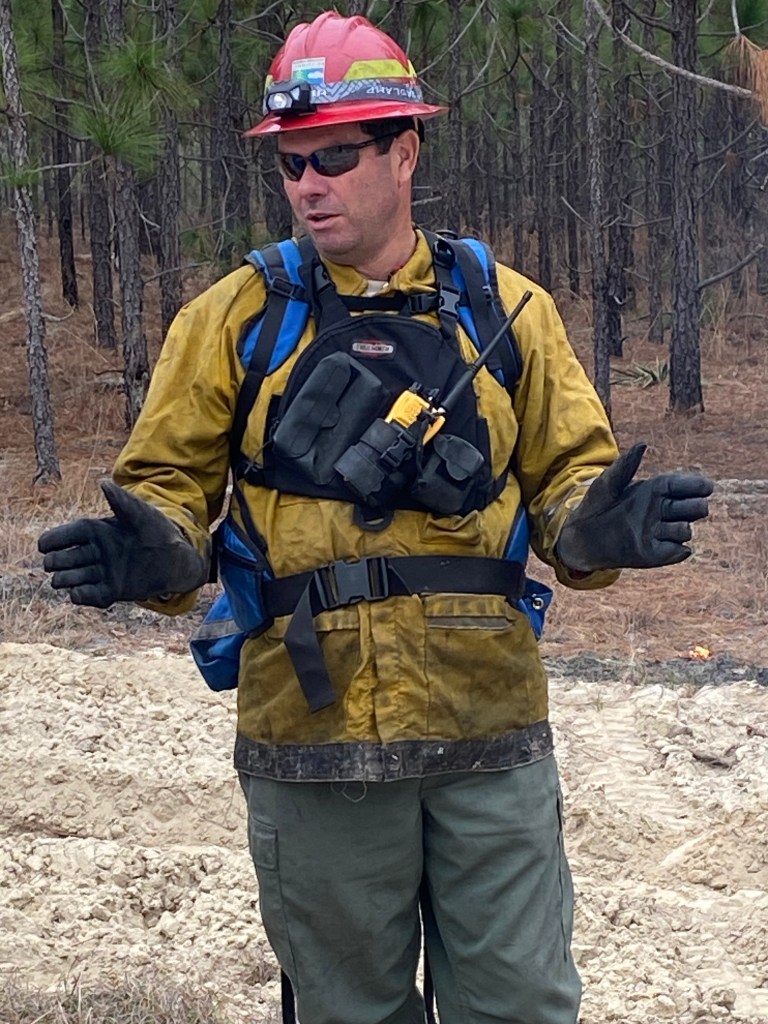
Along with financial commitments, it takes knowledge and planning to keep the “control” in a controlled burn. As Forester Matthew O’Conner from the Georgia Forestry Commission highlighted for the group, the appropriate wind, temperature, moisture in the soil, and humidity in the air should be present before a landowner sets fire to the woods. Fortunately, enough of the right conditions were present on this day in Georgia, even though the easterly wind was not ideal; the prevailing winds in the Southeast come from the west, which means those westerly winds are more consistent and predictable, O’Conner said.
So, the wind on this day made things slightly trickier, but the experts’ experience told them that the burn would probably still do what they wanted – stay at a low level and within the fire breaks plowed in the sandy earth around the longleaf stand.
As O’Conner and others spoke, the Fort Valley students were fully engaged; they brought college-kid energy and a bit of field-trip energy as well, and they were present and genuinely into the experience. Their spirit was uplifting to us older folks, and in practical terms, they were smart to pay close attention – considering that they would soon be handling a driptorch and spreading flames in the pine straw.
We ate lunch inside while trying to stay patient for the main event, when the flames and smoke would make their first appearance. Charles Williams was finishing his lunch next to me, and we talked for a few minutes. Williams was seeking ideas to help him manage the nearly fifty acres of woods and fields that he owns in Jefferson County, Ga. Williams cares a great deal about the land, and he works to sustain and improve its forest cover and habitat for wildlife.
Williams knows at a deep level that being outdoors and working with the land is essential for his well-being, he told me. He grew up in south Georgia, not too far from the vast Okefenokee Swamp; he loved to explore the swamp and he came to know that ecosystem very well. He also spent a lot of time outside in his early years farming with his family and other landowners to raise row crops and cattle.
Williams went on to serve for twenty-three years in the U.S. Army infantry, and he made it through combat during two deployments each in Iraq and Afghanistan. As he approaches fifty years old, Williams said that he finds being active outside even more important to him.
“I grew up in a very rural area, so birds and animals just always intrigued me,” he said. “Now, in this part of my life, I’m basically wanting to get back into the simpler things in life. A lot of things on Earth are changing – what we’re building, where they’re building, and moving wildlife to different parts. I really want to do what I can, on my piece of property, to help sustain what we have, as far as trees [and] wildlife.”
The damage caused by Hurricane Helene as it roared through Georgia in September 2024 hit Williams hard in a particular way, as a veteran of combat. The storm killed thirty-four people in Georgia and caused more than $7 billion in damage. For Williams, the hardships for people in his region, the damaged homes, and toppled and broken trees, were upsetting in part because they reminded him of war zones that he had experienced.
“The devastation from the hurricane impacted me in a way that I couldn’t really understand at first,” he said. “I had a lot of tree damage around me. My house and property were not so bad, but my neighbors, and [on] my daily commutes and long rides to see my family, it was destruction, and it weighed heavy on my heart. It was a lot.
“People didn’t understand what I was trying to say,” he remembered. “But to sum it up, it was chaos and confusion, destruction, which is really what happens in war.”
He struggled at times to function in the storm’s aftermath. He learned that some of his friends were feeling the same way, and he has worked since then to regain his equilibrium. One of the best medicines has been getting outdoors to help others recover from storm damage, and to continue taking care of his own land.
“It’s very therapeutic,” Williams shared. “It gives me personally a sense of peace. I’m an outdoors person. It’s calming to be outside, away from the chaos and confusion of everyday life. I can go outside and just be out there and think and pray, and kind of chart my way.”
For me, it was slightly odd to see a property owner set fire to his woods, as we watched Herbert Hodges touch a flame to a clump of brown pine straw at the edge of the longleaf stand. He has burned this area several times over the past thirteen years, as well as the other longleaf stands on the land.
After the flames caught, O’Conner demonstrated using a driptorch to spread the line of fire and begin setting the contours of the burn. These torches look a bit like large, old-fashioned oil cans, and are filled usually with a mixture of gasoline and diesel fuel. You certainly do not want to be goofing around with a driptorch in hand, but they are well-designed for safety.
The rangers gave the students turns at using the torches and extending the fire lines. As things progressed, the flames crackled through the straw and flared up in spots where vegetation such as gallberry grew, and the smoke built and drifted on the wind. Like the smoke, conversations and laughter filtered through the trees.
I was standing and talking with Dr. Cedric Ogden, the students’ professor from FVSU, when we noticed slow-moving lines of flame on three sides of us. We wondered for a second – they would not let us keep standing here if we were about to be surrounded by fire, would they? Nah. But we moved anyway, as casually as possible.
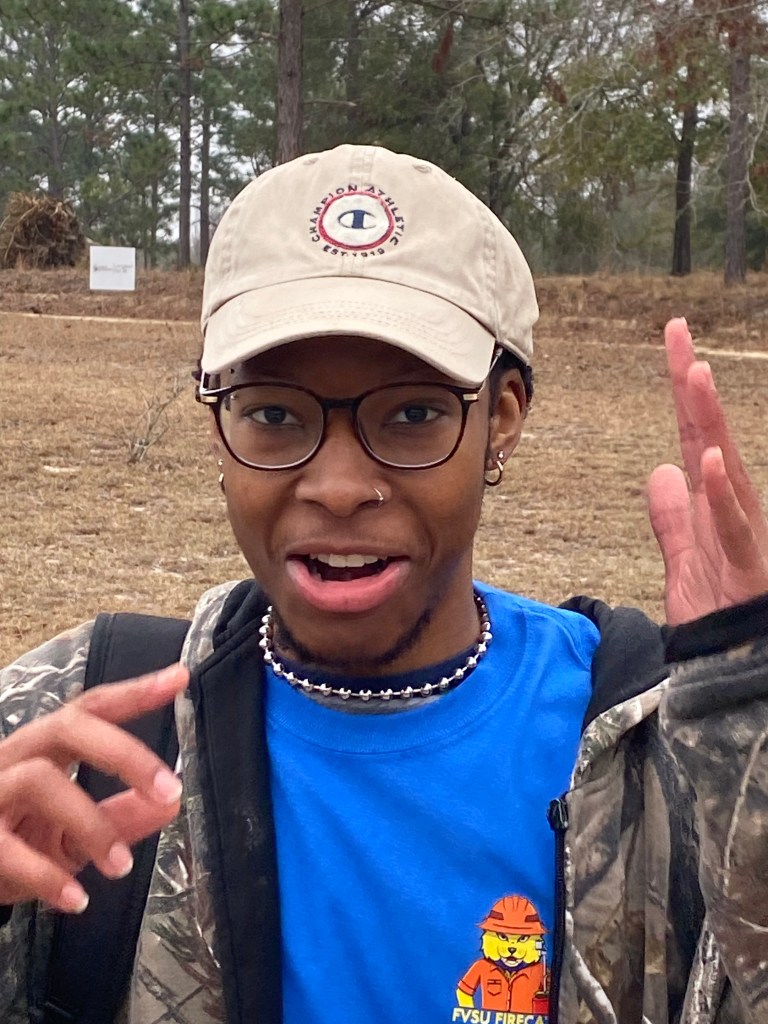
Afterwards, Bryan Hallman, an FVSU senior from Albany majoring in plant science, said that he was excited that his peers shared his enthusiasm for the burn event. The day for him was another step in building knowledge to bring back to campus, where Hallman is president of the FireCats, a club he helped to establish in part to spread the word about the importance of controlled burning. As an intern for the NWF, he also is helping carry out a plan to burn and restore more biodiversity in the longleaf woods on the university’s land. The NWF is partnering with the university on this plan, with collaboration from several other private and public entities.
“It was just amazing that we had young people working toward a profession to come in and really enjoy and see,” Herbert Hodges said, talking with me the day after the event. “For a lot of them, that’s the first time they’ve ever seen a prescribed burn taking place. They were highly interested in what we were doing. They were talking about how they can tie technology to the ecosystem [and] really link the living real world with all the technology that’s becoming available.
“They were teaching me a lot yesterday on what to expect out of our future professionals,” he added. “I see a bright light.”
The Hodges family’s homestead near Swainsboro includes about six hundred acres, where Herbert Hodges leads the work to plant and maintain longleaf. He is the youngest of nine siblings, the children of Willie and Dora Hodges, who grew up there and were fully involved from an early age in raising food and cash crops that supported their large family.
“I’ve always enjoyed working and didn’t mind working,” Hodges said. “Since I grew up on the farm, I was used to working with implements and so forth. I was able to save or indirectly save labor costs and a lot of money by doing the work myself.”
He paused and added that, actually, he and his wife Sandra did much of the initial work of replanting longleaf together.
“Believe me, in our first round of planting trees, she [planted] the trees while I drove the tractor,” he said, smiling.
Hodges and the family are devoted to restoring longleaf and keeping ownership of this land in part to honor an important achievement by their great-grandparents, Jarrett and Ginsey Durden, who were born into slavery in the mid-nineteenth century. About twenty years after Emancipation in 1865, they succeeded in buying land in Emanuel County, and they increased their holdings over the years to nearly 2,000 acres, while raising ten children.
The Hodges family’s land today is a portion of the acreage that their great-grandparents had accumulated, despite the many obstacles that African Americans in the South faced in buying and keeping ownership of land in the decades after 1865.
The family is raising longleaf pine now in part to create a potential source of revenue that could help maintain this ownership in the future; but they also want to encourage more of the remarkable biodiversity that is possible in longleaf forests, from the microorganisms, insects, and plants, to the birds, reptiles and larger critters that reside there.
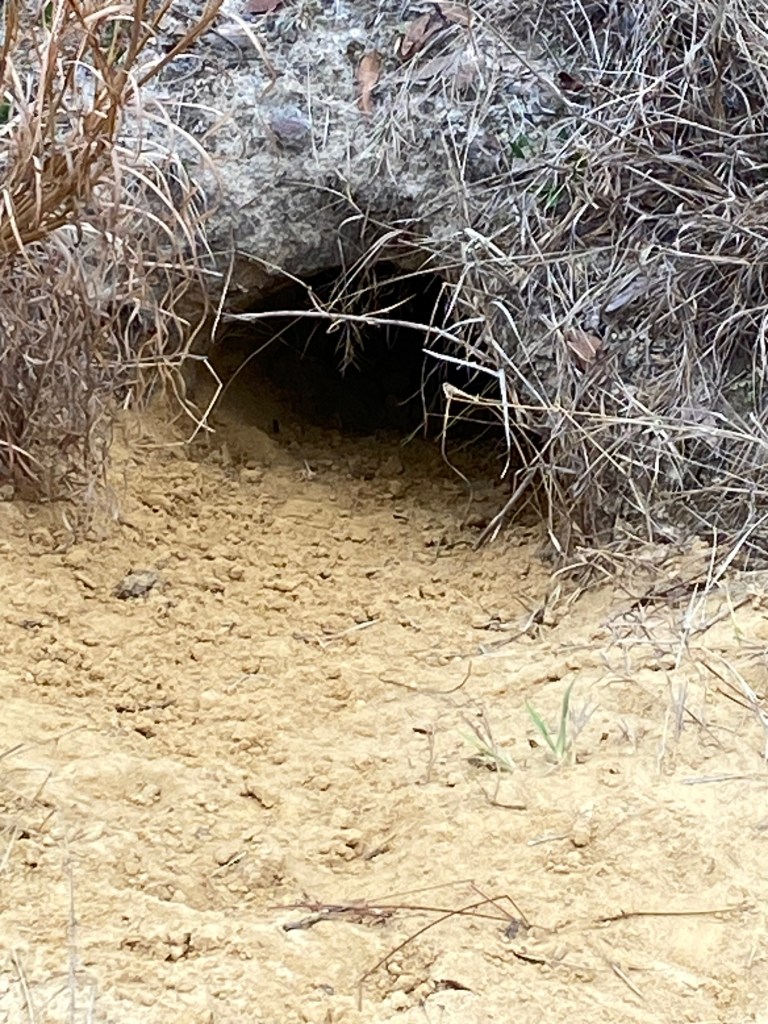
For example, Hodges has seen the populations of gopher tortoises, wild turkey, deer, and other animals increase as he has planted and managed longleaf on about 450 acres of the property. For him and other family members, the joy of watching wildlife in the early mornings is one of the major payoffs.
Note: The burn at the Hodges’s property in February 2025 was the National Wildlife Federation’s annual “Learn and Burn” event. Partners in the event included the Natural Resources Conservation Service; U.S. Forest Service; Tall Timbers; Georgia Forestry Commission; Georgia Wildlife Federation; Longleaf Alliance; Pine Country Resource Conservation and Development Council; and Wildlife Resources Division of the Georgia Department of Natural Resources.
Five helpful links:
1. “Built by Fire,” from the Longleaf Alliance 2. “Longleaf Restoration,” from the Jones Center at Ichauway 3. Pursuing a vision for renewing longleaf ecosystems, from America’s Longleaf Restoration Initiative 4. “Longleaf Forever,” from the Longleaf Alliance 5. The gopher tortoise as a keystone species, from The Nature Conservancy



 Taproots Journal
Leave a comment